
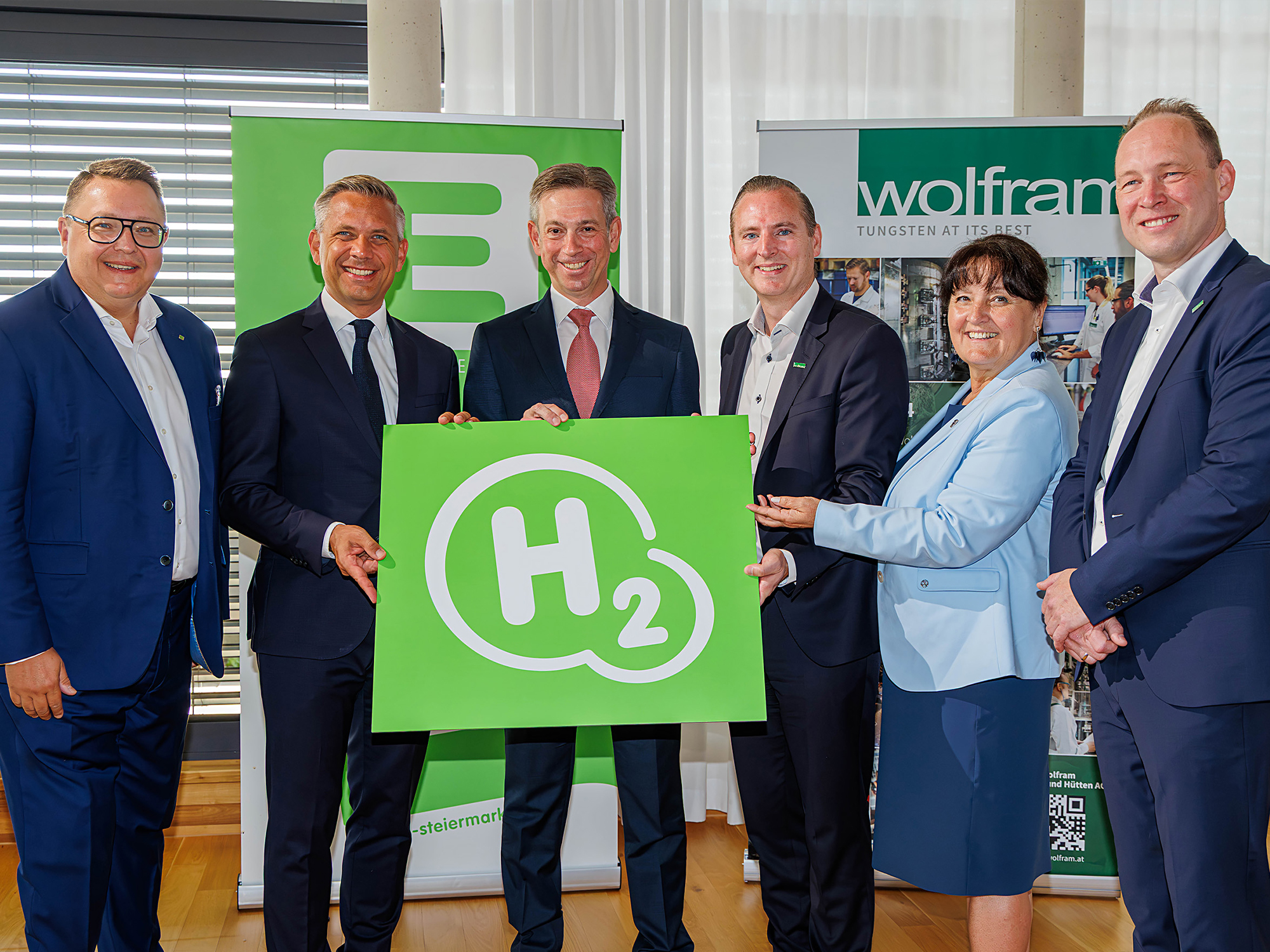
Energie Steiermark, Wolfram Bergbau und Hütten AG, the Austrian Federal Ministry for Economic Affairs, Energy and Tourism, and the Sandvik Group have joined forces to develop what will become the largest industrial green hydrogen production facility in the Austrian state of Styria.
The new H2 Hub Bergla, located in western Styria, represents a €25 million investment and is expected to begin construction in autumn 2026 before entering operation in 2027. The project will be supported by up to €28.5 million in federal funding over the next decade, underlining Austria’s ambition to accelerate the deployment of green hydrogen in heavy industry.
At the heart of the project will be a 5 MW electrolyser powered primarily by renewable electricity generated from Energie Steiermark’s nearby wind farms. Once operational, the facility will produce up to 750 tonnes of green hydrogen annually, reducing carbon dioxide emissions by an estimated 8,500 tonnes each year.
The hydrogen will initially be supplied to Wolfram Bergbau und Hütten AG, one of the world’s leading producers of high-quality tungsten powders and a member of the Sandvik Group. The company will use renewable hydrogen in its manufacturing processes as part of its long-term strategy to achieve net-zero emissions by 2050.
A dedicated hydrogen pipeline, approximately one kilometre long, will directly connect the production facility in Bergla with Wolfram’s industrial site in nearby St. Martin. The project has also been designed with future integration into the emerging European hydrogen pipeline network in mind, allowing for potential expansion as demand grows.
Beyond supplying a single industrial customer, the Bergla facility is intended to become the foundation of a broader regional hydrogen hub. Energie Steiermark has indicated that additional industrial partners could be connected in future phases as production capacity expands.
The project builds on Energie Steiermark’s growing hydrogen activities, following the launch of a pilot hydrogen facility in Gabersdorf and the creation of a dedicated hydrogen subsidiary last year. The company sees Bergla as an important step toward establishing large-scale hydrogen infrastructure capable of supporting industrial decarbonisation across Austria.
For Austria, the development represents another milestone in its national hydrogen strategy. Green hydrogen is expected to play a crucial role in reducing emissions from industries that are difficult to electrify, while strengthening domestic renewable energy use and improving long-term energy security.

