Germany’s hydrogen economy has taken a significant step forward as energy company EWE and steel producer Salzgitter Flachstahl, a subsidiary of Salzgitter AG, signed a long-term agreement for the supply of renewable hydrogen. The deal is one of the first major industrial hydrogen contracts in the country and highlights the growing connection between large-scale hydrogen production and industrial decarbonisation. Under the agreement, EWE will supply approximately 10,000 tonnes of green hydrogen annually from its planned 320 MW electrolyser facility in Emden, one of the largest hydrogen production projects currently under development in Germany. Deliveries are expected to begin in 2030 via the future German hydrogen backbone network. The hydrogen will be used in Salzgitter’s SALCOS® (Salzgitter Low CO₂ Steelmaking) programme, the company’s flagship initiative to transform conventional steel production into a low-carbon process. While the first phase of the programme relies on natural gas in direct reduction technology, the long-term objective is to transition to renewable hydrogen, enabling steel production with water as the primary by-product instead of carbon dioxide. The contract, which runs for an initial seven years, represents EWE’s first major commercial sales agreement from the Emden hydrogen project and Salzgitter’s first large-scale external hydrogen supply arrangement. The annual volume will cover roughly 6.5% of the hydrogen demand expected for the SALCOS programme, which could eventually consume up to 150,000 tonnes of hydrogen per year. Salzgitter also plans to produce part of its hydrogen demand internally through a dedicated 100 MW electrolyser at its steelworks. The agreement is widely viewed as an important signal for the emerging hydrogen market because it demonstrates that both producers and industrial consumers are willing to make long-term commitments before the market is fully established. Such agreements are considered critical for unlocking investment in hydrogen production, infrastructure, storage, and transportation. Beyond reducing emissions from steelmaking, the partnership is expected to strengthen Germany’s industrial competitiveness by supporting domestic energy production and reducing reliance on imported fossil fuels. Hydrogen is increasingly seen as a key solution for decarbonising hard-to-abate sectors such as steel, chemicals, and heavy manufacturing. At the same time, both companies emphasized that regulatory and economic challenges remain. Industry leaders continue to call for more competitive electricity pricing for electrolysers, greater flexibility in renewable hydrogen certification rules, and stronger policy support to accelerate market development. The project forms part of EWE’s broader Clean Hydrogen Coastline initiative, which includes hydrogen production, storage, and transport infrastructure in northwest Germany. Supported by federal and regional governments, the initiative aims to establish one of Europe’s most important hydrogen hubs and help lay the foundation for a large-scale hydrogen economy.

EWE and Salzgitter Secure Landmark Green Hydrogen Deal for Low-Carbon Steel Production

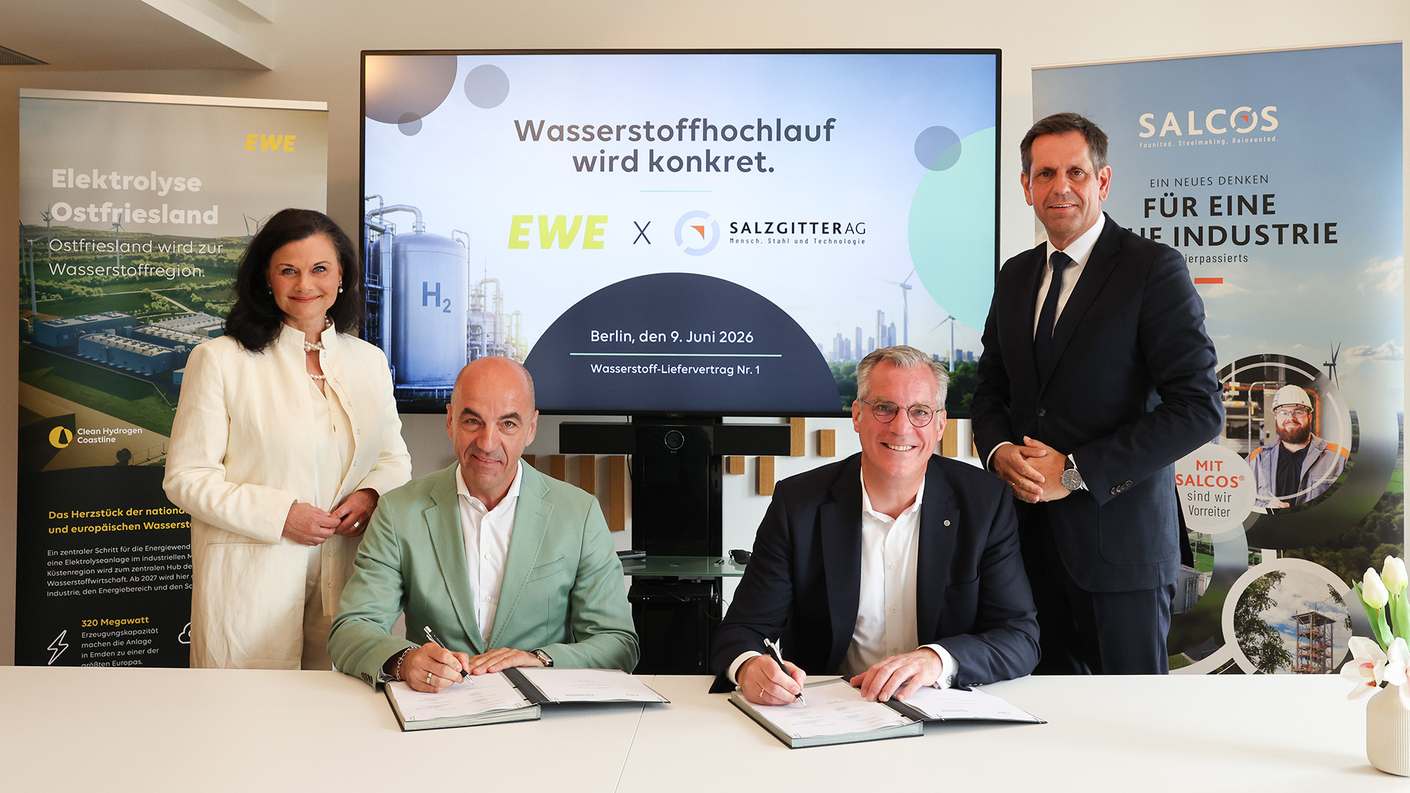
Germany’s hydrogen economy has taken a significant step forward as energy company EWE and steel producer Salzgitter Flachstahl, a subsidiary of Salzgitter AG, signed a long-term agreement for the supply of renewable hydrogen. The deal is one of the first major industrial hydrogen contracts in the country and highlights the growing connection between large-scale hydrogen production and industrial decarbonisation.

Under the agreement, EWE will supply approximately 10,000 tonnes of green hydrogen annually from its planned 320 MW electrolyser facility in Emden, one of the largest hydrogen production projects currently under development in Germany. Deliveries are expected to begin in 2030 via the future German hydrogen backbone network.

The hydrogen will be used in Salzgitter’s SALCOS® (Salzgitter Low CO₂ Steelmaking) programme, the company’s flagship initiative to transform conventional steel production into a low-carbon process. While the first phase of the programme relies on natural gas in direct reduction technology, the long-term objective is to transition to renewable hydrogen, enabling steel production with water as the primary by-product instead of carbon dioxide.

The contract, which runs for an initial seven years, represents EWE’s first major commercial sales agreement from the Emden hydrogen project and Salzgitter’s first large-scale external hydrogen supply arrangement. The annual volume will cover roughly 6.5% of the hydrogen demand expected for the SALCOS programme, which could eventually consume up to 150,000 tonnes of hydrogen per year. Salzgitter also plans to produce part of its hydrogen demand internally through a dedicated 100 MW electrolyser at its steelworks.

The agreement is widely viewed as an important signal for the emerging hydrogen market because it demonstrates that both producers and industrial consumers are willing to make long-term commitments before the market is fully established. Such agreements are considered critical for unlocking investment in hydrogen production, infrastructure, storage, and transportation.

See also  VSPARTICLE and Plug Power Validate Breakthrough Catalyst Technology That Cuts Iridium Use by 90% in PEM Electrolyzers

Beyond reducing emissions from steelmaking, the partnership is expected to strengthen Germany’s industrial competitiveness by supporting domestic energy production and reducing reliance on imported fossil fuels. Hydrogen is increasingly seen as a key solution for decarbonising hard-to-abate sectors such as steel, chemicals, and heavy manufacturing.

At the same time, both companies emphasized that regulatory and economic challenges remain. Industry leaders continue to call for more competitive electricity pricing for electrolysers, greater flexibility in renewable hydrogen certification rules, and stronger policy support to accelerate market development.

The project forms part of EWE’s broader Clean Hydrogen Coastline initiative, which includes hydrogen production, storage, and transport infrastructure in northwest Germany. Supported by federal and regional governments, the initiative aims to establish one of Europe’s most important hydrogen hubs and help lay the foundation for a large-scale hydrogen economy.

Related Posts