
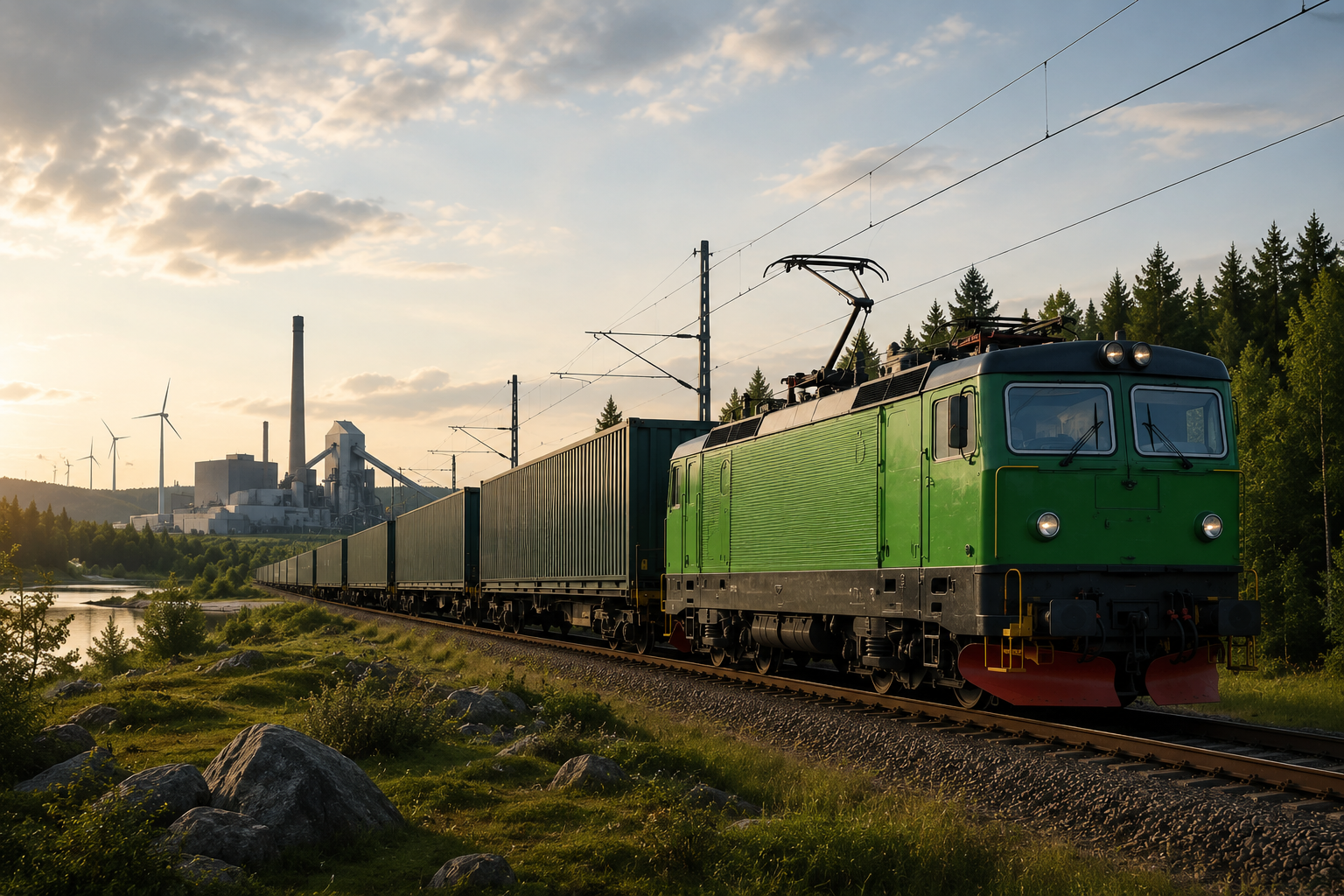
Swedish green steel producer Stegra has selected Green Cargo, Sweden’s largest rail freight operator, to manage key transportation flows for its upcoming steel plant in Boden. The agreement covers the movement of both raw materials into the facility and finished steel products to ports and customers, creating an important logistics backbone for one of Europe’s most ambitious industrial decarbonisation projects.
Formerly known as H2 Green Steel, Stegra is building a next-generation steel plant in northern Sweden that aims to dramatically reduce emissions from steelmaking by replacing coal with green hydrogen produced from renewable electricity. Once fully operational, the integrated facility is expected to become one of the world’s largest users of green hydrogen and a major contributor to the decarbonisation of the steel industry, one of the largest industrial sources of carbon emissions globally.
Under the new agreement, Green Cargo will connect the Boden site with key logistics hubs and ports, ensuring efficient transport of iron ore, other production inputs, and finished steel products. The rail operator will play a central role in linking the facility to previously announced port partnerships in Luleå, Skellefteå, and Umeå.
The partnership is strategically important because logistics represent a critical component of Stegra’s business model. Producing low-carbon steel is only part of the equation; transporting raw materials and finished products efficiently and with minimal emissions is also essential for reducing the overall carbon footprint of the value chain.
From an industry perspective, the agreement highlights the growing importance of integrated infrastructure in supporting Europe’s green industrial transition. Large-scale projects such as Stegra require not only renewable energy and hydrogen production but also reliable transportation networks capable of handling significant freight volumes in a cost-effective and sustainable manner.
Green Cargo brings extensive experience in industrial rail logistics and is expected to help establish stable supply chains as Stegra prepares for future operations. Rail transport also offers significant environmental advantages over road freight, aligning with the broader objective of reducing emissions across the entire steel production and distribution process.
As construction continues in Boden, partnerships across energy, hydrogen, logistics, and infrastructure are becoming increasingly important to ensure the successful ramp-up of what could become a blueprint for low-carbon steel production in Europe.

