
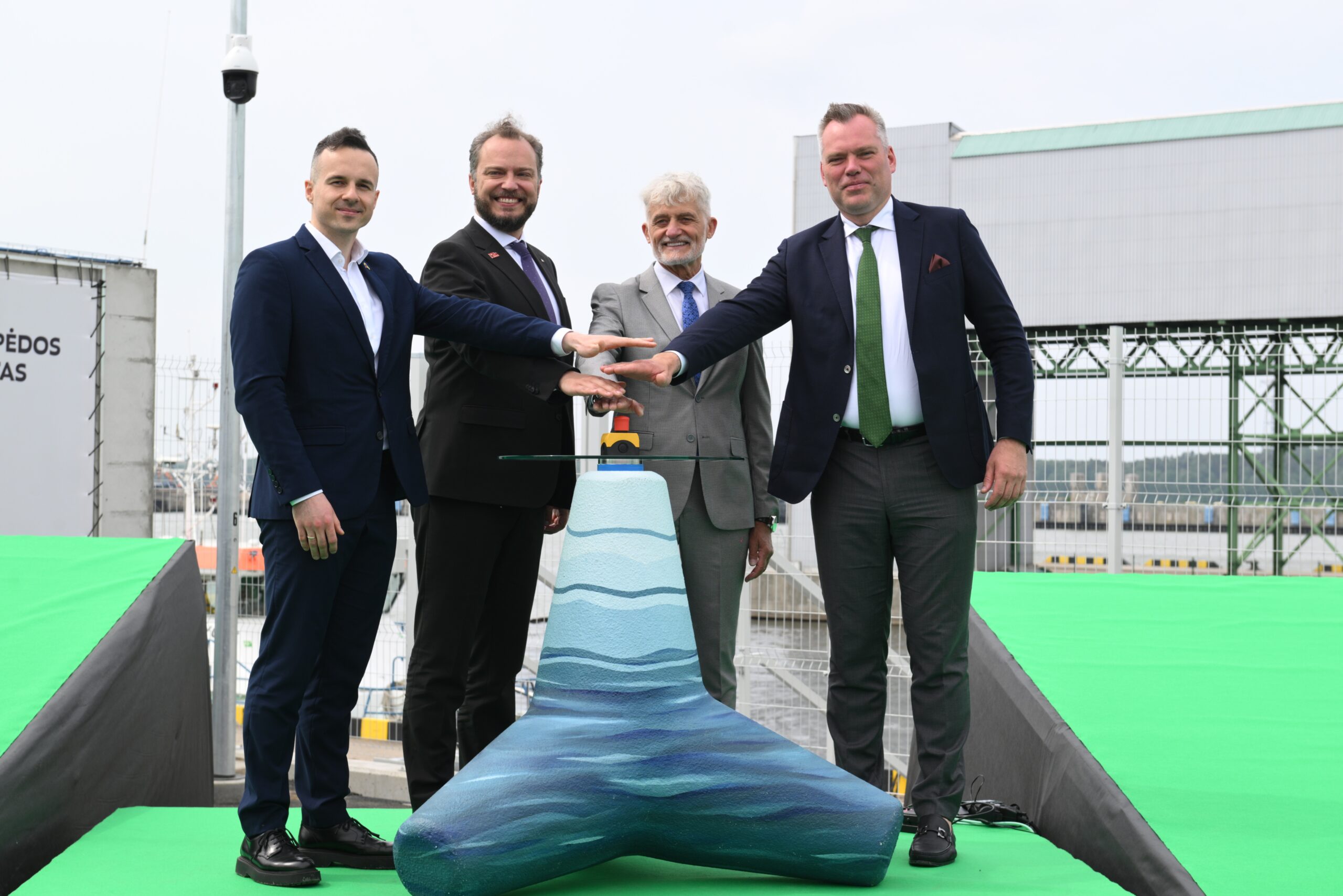
Lithuania has taken a major step toward building a hydrogen economy with the inauguration of its first green hydrogen production and refuelling station at the Port of Klaipėda. The new facility is designed to support the growing adoption of hydrogen-powered mobility and will supply renewable hydrogen to road transport, maritime applications, and port operations.
The project positions Klaipėda as a key center for clean energy innovation in the Baltic region. Developed over the past several years, the initiative moved from concept to reality following the start of construction in 2025. After equipment installation and commissioning, the facility successfully produced its first green hydrogen earlier this year.
At the heart of the plant is a proton exchange membrane (PEM) electrolyser, which uses renewable electricity to split water into hydrogen and oxygen. Once fully operational, the facility is expected to produce approximately 127 tonnes of green hydrogen annually.
The Port of Klaipėda will also become one of the first users of the hydrogen it produces. Around 25% of the plant’s output has been earmarked for the port authority’s own decarbonisation efforts. This includes powering a new hydrogen-fueled waste collection vessel and supporting a growing fleet of hydrogen-powered vehicles, including a Toyota Mirai already in operation.
Beyond its own activities, the port intends to use the facility as open-access infrastructure for the wider transport and logistics sector. The Klaipėda Port Authority is working with partners including LTG Group, BEGA, and Volvo Lietuva to explore hydrogen applications in freight transport, rail operations, and cargo-handling activities.
Commercial hydrogen deliveries are expected to begin in autumn 2026, helping to establish the foundations of a broader hydrogen ecosystem in Lithuania.
The project was developed with support from the Next Generation Lithuania recovery programme, financed through the European Union’s NextGenerationEU initiative. Total investment in the facility is estimated at approximately €12 million, with around half of the funding provided through EU support mechanisms.
As Europe accelerates efforts to decarbonise hard-to-electrify sectors, the Klaipėda hydrogen hub demonstrates how ports can become strategic centers for renewable fuel production, distribution, and adoption across multiple industries.
