
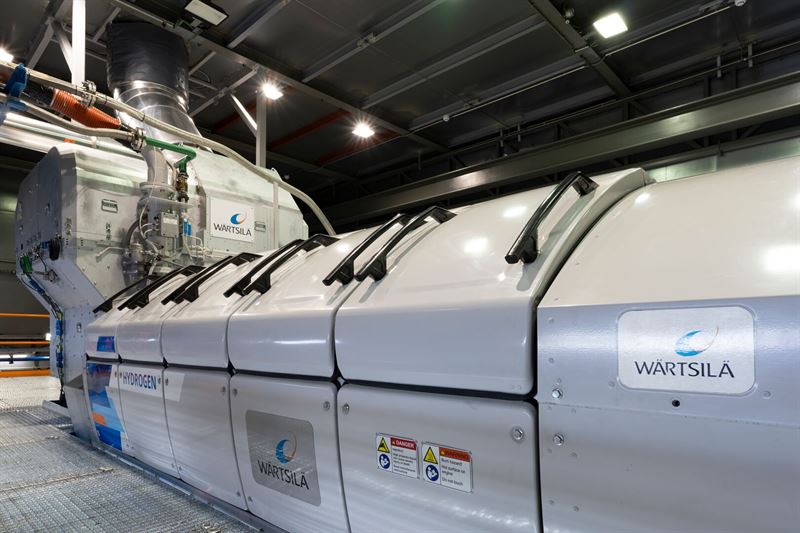
Wärtsilä has reached a major milestone in the development of hydrogen-powered electricity generation, successfully operating what it says is the world’s first large-scale engine running entirely on hydrogen while supplying power directly to a national electricity grid.
The demonstration took place at the company’s testing facility in Bermeo, northern Spain, where the new Wärtsilä 31H2 engine generated electricity using 100% hydrogen fuel under real-world grid conditions. The project represents a significant advancement beyond “hydrogen-ready” technologies, proving that large engine-based power plants can operate entirely on hydrogen and contribute to grid stability.
As renewable energy deployment accelerates globally, balancing electricity systems has become an increasingly important challenge. Wind and solar power can fluctuate depending on weather conditions, creating a growing need for flexible generation technologies capable of providing reliable backup power when renewable output declines.
Hydrogen is increasingly viewed as a potential solution to this challenge. Produced using renewable electricity, green hydrogen can store surplus energy during periods of high renewable generation and later be converted back into electricity when demand rises or renewable production falls.
The Wärtsilä 31H2 engine is based on the company’s highly efficient Wärtsilä 31 platform, one of the world’s most advanced multi-fuel four-stroke engine designs. According to Wärtsilä, the new system is currently the largest engine in the world capable of operating solely on hydrogen.
The successful grid-connected trial demonstrates that hydrogen can move from pilot concepts into practical energy infrastructure applications. Beyond supporting renewable-heavy power systems, the technology could also play an important role in supplying low-carbon electricity to energy-intensive industries, manufacturing facilities, and rapidly growing sectors such as AI data centers.
Spain was selected as the location for the demonstration due to its leadership in renewable energy deployment and its efforts to reduce dependence on fossil fuels. The country’s growing renewable energy capacity provides an ideal environment for testing technologies that can help stabilize future low-carbon electricity systems.
The validation program is now focused on gathering operational data and demonstrating commercial readiness. Industry observers see the achievement as an important step toward future hydrogen-fired power plants that could complement renewable generation and support deeper decarbonization of electricity grids worldwide.
With renewable energy capacity expected to expand dramatically over the coming decade, technologies capable of providing flexible, dispatchable, and carbon-free power are likely to become increasingly important components of future energy systems.
