
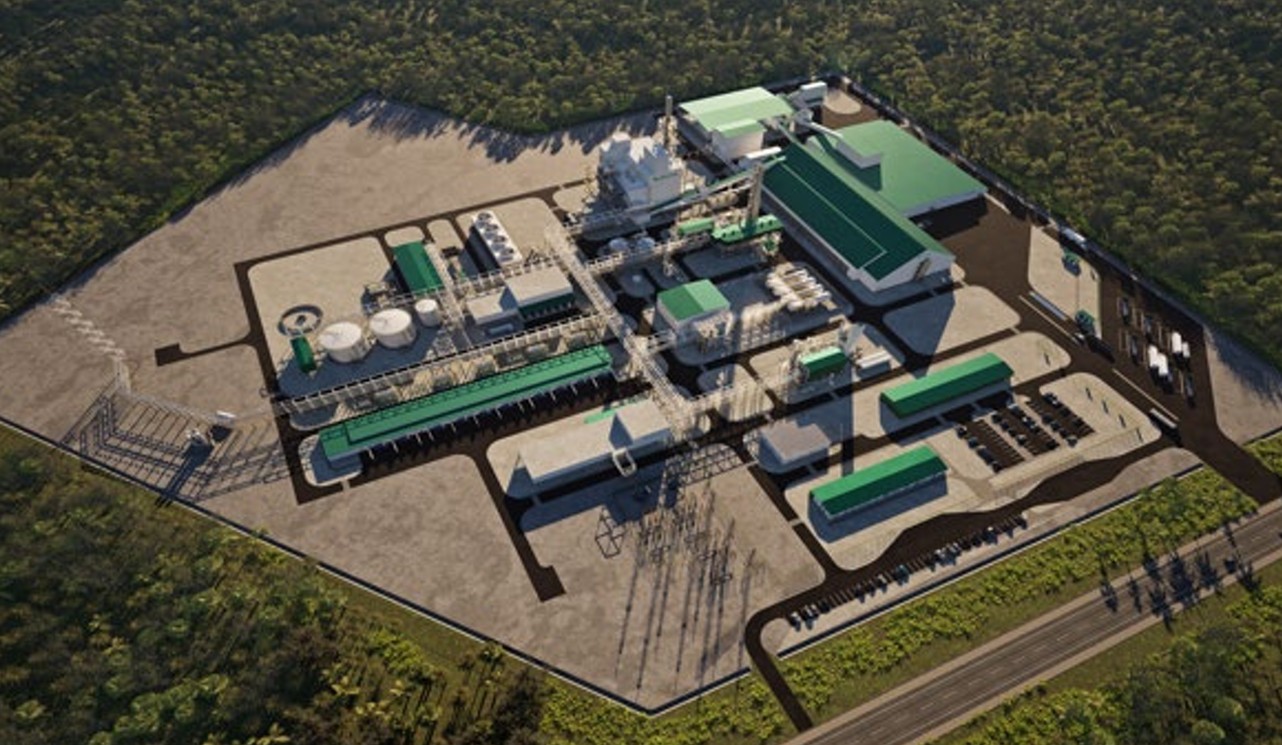
ATOME PLC has approved the final investment decision for its flagship green fertiliser project in Villeta, Paraguay, paving the way for construction of what the company describes as the world’s first industrial-scale low-carbon fertiliser plant powered entirely by renewable energy.
The project represents a major milestone for the green hydrogen industry and for the decarbonisation of global agriculture. Once operational, the facility will produce 260,000 tonnes of low-carbon calcium ammonium nitrate (CAN) fertiliser annually using renewable hydropower and green hydrogen instead of fossil fuels. Full production is expected to begin by October 2029.
To bring the project to execution, ATOME secured a total financing package of US$665 million, including US$420 million in debt financing from major international institutions such as IDB Invest, IFC, the European Investment Bank, FMO, and the Green Climate Fund. The equity portion is led by Hy24 — one of the world’s largest clean hydrogen infrastructure investors — alongside IFC, KfW DEG, IFDK, Sudameris Bank, and ATOME itself.
At the heart of the project is green hydrogen produced using Paraguay’s abundant renewable hydropower resources. The hydrogen will replace natural gas traditionally used in fertiliser manufacturing, significantly lowering emissions and reducing dependence on fossil fuel imports. According to the company, the facility could avoid up to 500,000 tonnes of CO₂ emissions annually and more than 12.5 million tonnes over the lifetime of the project.
The Villeta plant is strategically located in the Mercosur region, one of the world’s largest fertiliser import markets. ATOME says the project is designed to strengthen regional food security by creating a local, fossil-free fertiliser supply chain less exposed to global energy price volatility and geopolitical disruptions.
Engineering and construction activities will be supported by Swiss technology company Casale, while Norwegian fertiliser giant Yara International has signed a 10-year agreement to purchase the plant’s full production output.
ATOME CEO Olivier Mussat described the project as a breakthrough for industrial-scale green hydrogen applications.
“Villeta is only the beginning as ATOME rolls out its replicable blueprint, proving that the green transition doesn’t need subsidies to be profitable. It needs the right commitment, engineering and partners,” he said.
Hy24 CEO Pierre-Etienne Franc added that the project demonstrates how green hydrogen can strengthen both energy security and food production resilience.
The Villeta development is widely seen as a landmark project for green hydrogen-based fertiliser production and could become a model for future industrial decarbonisation projects globally.

